

If you’ve ever found yourself on the edge of sleep, only to be greeted by a crawling, twitchy feeling in your legs, you’re not alone. Restless Legs Syndrome (RLS) can make bedtime anything but relaxing. Chronic, low-grade inflammation might actually be playing a role in those uncomfortable sensations and sleep disruptions. Some foods can help dial down inflammation and, over time, give your nerves and muscles the chance to settle down. That’s the idea behind using anti-inflammatory foods for restless legs.
Compounds like omega-3 fatty acids, curcumin (from turmeric), and gingerols (from ginger) support better circulation, lower oxidative stress, and help soothe irritated tissues—without relying solely on medication. If you’ve ever wondered what foods to try or how to work them into your week, you’re in the right spot. I’m breaking down anti-inflammatory foods for restless legs, why they matter, how to get started with a shopping list, and how to make meal prepping a whole lot easier. And just for good measure, I’ll share some bonus insights into habits that can step up your natural RLS relief.
Note: These ideas can fit alongside other approaches and lifestyle tweaks, but it’s a good move to talk with your doctor if you have ongoing RLS, sudden new symptoms, or health conditions that could be involved.
“Learn more about what RLS is and how to treat it.“
How Inflammation Affects Restless Legs Syndrome
Long-standing research on RLS points toward dopamine imbalances, but there’s more to the story. Chronic inflammation can make both nerve and muscle cells extra sensitive, especially at night. Lowering inflammation through a natural anti-inflammatory diet for restless legs may ease those uncomfortable symptoms and even help smooth out dopamine signaling pathways in the brain.
Some RLS communities report fewer flare-ups or milder episodes after adding more anti-inflammatory foods. Omega-3s, found mainly in fatty fish and seeds, can lower inflammation markers and improve blood flow through tiny vessels, lending important support to both nerve and muscle health. Turmeric and ginger, in particular, work by turning down inflammatory pathways in the body, like the NF-kB pathway, which often fuels nerve irritation and muscle discomfort. While research for RLS specifically is still ramping up, early evidence and real-world stories are encouraging about these foods. Consistently adding these ingredients can make a notable difference for many people.
In addition to inflammation, iron deficiency is another factor that sometimes pops up in RLS. Keeping an eye on iron-rich food sources, like lentils, beans, and leafy greens, is a simple secondary strategy. Pairing iron foods with vitamin C-rich veggies (peppers, citrus, strawberries) can help your body snag more of the iron from plant-based meals and give your body a bigger boost.
“Learn more about Alternative Therapies for RLS“
Omega-3 for RLS: Best Sources and Benefits
Omega-3 fatty acids are pretty handy for soothing irritated nerves and muscles. Some studies suggest omega-3 can reduce the kind of inflammation that targets nerve endings, a key reason they tend to be a highlight in any anti-inflammatory foods for restless legs lineup.
You’ll find rich sources of omega-3 in:
- Fatty fish: Salmon, sardines, and mackerel deliver a big dose in just a couple of servings each week.
- Seeds: Flaxseeds and chia seeds are a solid plant-based option. I like tossing them on oatmeal or blending them into smoothies.
- Walnuts: Crunchy, portable, and easy to add to snacks.
- Algae oil: Great for anyone following a vegan diet. It gives you DHA and EPA forms of omega-3 without fish.
For omega-3 for RLS, aim for 2-3 servings of oily fish weekly, or add a small handful of seeds or nuts daily. Pairing omega-3 foods with vitamin E-rich veggies, like spinach or avocado, keeps those good fats from breaking down and pumps up the benefits even more. Experiment with mixing these healthy fat sources into snacks or salad toppers, and you’ll make the most of their effect.
“Learn more about Nutrition & RLS”
Turmeric and Ginger for Restless Legs Relief
Turmeric and ginger are both rooted in ancient medicine for a reason. Turmeric’s main active ingredient, curcumin, works deep in your body to block specific inflammation signals and protect both nerves and circulation. Even a quarter teaspoon of turmeric goes a long way when used regularly in meals or drinks.
To help your body grab all the curcumin it can, try combining turmeric with black pepper and a healthy fat. This combination wakes up turmeric’s effectiveness, so adding it to curries, stir-fry, or blending it into a “golden milk” with coconut or almond milk is a great strategy.
Ginger has its own power when it comes to fighting inflammation. Gingerols, the compounds that give ginger its spicy kick, are especially good at cooling oxidative stress in nerves and soothing muscle tissues. Try ginger tea, add thin slices to a veggie stir-fry, or grate fresh ginger into dressings and smoothies. Some people also get positive results from turmeric and ginger supplements, though whole foods are usually the better (and tastier) first step.
If you’re unsure about turmeric for restless legs or ginger for RLS relief, they’re worth trying. Most people notice gentle effects after making them a part of daily meals for at least a few weeks. Being consistent is key—real results aren’t likely to happen overnight.
Tip: If you don’t love turmeric’s flavor, mix it into soups or blend it into fruit smoothies, where the taste fades beneath other ingredients.
More Anti-inflammatory Foods for Restless Legs
There’s a whole world of anti-inflammatory foods beyond omega-3s, turmeric, and ginger. Add-ins like colorful berries, leafy greens, sweet potatoes, beets, and healthy oils all bring antioxidants, vitamins, and minerals that support nerves and muscles. Paying attention to variety will help your body get everything it needs for smoother nights and more comfortable sleep.
Consider adding these to your week:
- Berries: Blueberries, raspberries, and cherries are loaded with antioxidants, which help manage oxidative stress linked to restless legs.
- Leafy greens: Spinach, kale, and Swiss chard are full of magnesium and vitamin E.
- Sweet potatoes: Packed with potassium and fiber that promote muscle relaxation and steady energy.
- Extra virgin olive oil: Has heart protective, inflammation busting compounds to round out your meals.
Mixing in a range of anti-inflammatory foods ensures your body isn’t missing any crucial building blocks for restful legs and better recovery overnight.
“Read our Product Reviews for RLS symptom relief”
Anti-inflammatory Shopping List + Meal Prep Tips for RLS
When building a grocery list focused on omega-3 turmeric ginger for restless legs syndrome, it helps to have everything in one place. Here’s a handy breakdown you can screenshot or copy for your next market trip:
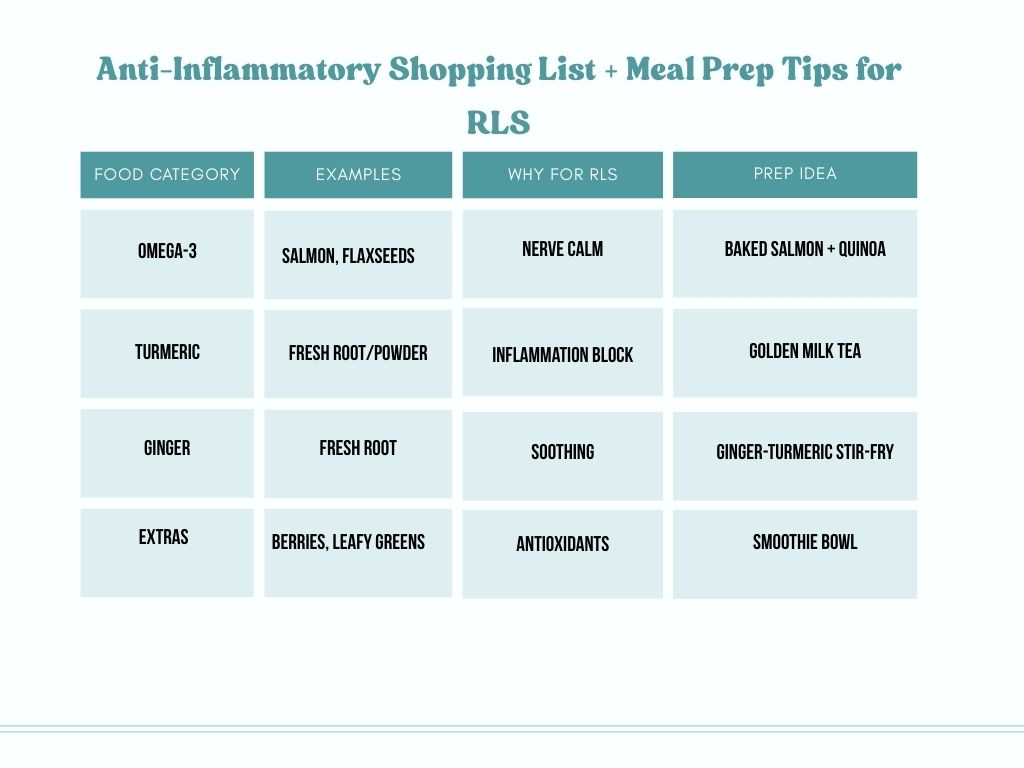
I usually do one big meal prep session at the start of the week. A batch of golden milk is easy to reheat and pour—just blend unsweetened almond milk, turmeric, ginger, black pepper, and honey to taste. I’ll also cook up several salmon fillets or big veggie salads with chia seeds and walnuts to keep in the fridge. If you’re wanting something more portable, try making ginger energy balls with oats, or stir chia seeds into overnight oats for busy mornings.
If you like planning ahead, here’s a sample meal prep schedule:
- Monday-Wednesday: Baked salmon or sardines with sweet potatoes and garlic spinach.
- Thursday: Stir-fry with ginger, turmeric, tofu, and broccoli over brown rice.
- Friday: Golden milk teamed up with a nutty berry smoothie for breakfast.
- Snacks: Flaxseed energy balls, walnuts, or chia pudding cups.
Rotating meals and snacks like these will help keep your routine interesting, plus make sure you’re hitting a broad range of nutrients that help ease RLS inflammation with food.
“Discover Diagnosis & Treatments for RLS symptom relief”
Bonus Tips: Everyday Habits for Calmer Legs
While food can give your body a much-needed boost, it’s the blend of food, movement, and habits that really helps restless legs. Light stretching in the evening, a few minutes of gentle yoga, or a warm bath can all dial down tension before bed. Keeping electronics out of the bedroom, sticking to a regular sleep schedule, and cutting back on caffeine and alcohol in the afternoon and evening can further increase your odds of a peaceful night.
If you’re sitting a lot during work, take regular movement breaks or add a standing desk if possible. Blood flow and nerve health love consistent, gentle activity throughout the day.
Calm Your Restless Legs with Anti-inflammatory Eating
A steady, daily flow of anti-inflammatory foods for restless legs really can make life a little smoother. The changes are usually gradual but build over weeks and months with consistent effort. By working omega-3s, turmeric, ginger, fresh veggies, and whole grains into your meals, you’re giving your body real, gentle support for calming nerve irritation and muscle restlessness in a natural way.
Try one new recipe this week and watch how your legs—and your sleep—feel after a few days. I’d love to know what works for you or any tricks you find along the way. Drop your experience in the comments.
Disclaimer: This post is based on my personal experience and research. It’s not a substitute for professional medical advice. Consult your doctor before making changes to your health routine, especially if you have underlying conditions or are on medications.
I have terrible RLS and walking on treadmill even at 1:00 A.M. when you can’t sleep. A hot bath or shower leaves me with Dizziness and low blood pressure, which is making me feel faint.
My meds, Requip, Gabapentin do not seem to be working nor other drugs that have been prescribed. Pramipexole takes my memory away. Heating pads work but I am finding nothing really helps.
Hi,
First, I want to sincerely apologize for not responding to your comment sooner. I truly appreciate you taking the time to share what you’re going through.
I completely understand how exhausting and frustrating this is. For years I was on Ropinirole (Requip) and it was always hit or miss. Eventually it just stopped working altogether. I also tried other medications, and like you with Pramipexole, the side effects were rough. Walking on the treadmill at 1:00 a.m. because you can’t sleep, dealing with dizziness after hot baths, and feeling like nothing truly helps — that’s incredibly tough. I’m really sorry you’re going through this right now.
What finally gave me meaningful relief was shifting to a more natural approach. I focused on magnesium, getting my iron levels checked and supplemented when needed, eating a cleaner diet, and significantly cutting back on caffeine. I’m still not 100% symptom-free, but I can sleep so much better now than I could when the medications were failing me.
Everyone’s body is different, so it often takes some experimentation with different combinations. Please don’t give up — many people find that certain nutrients, lifestyle tweaks, or specific routines eventually click and bring real improvement.
I’m sending prayers your way for relief and better rest. Hang in there, and feel free to update me on how things are going or ask about anything specific you’ve tried. You’re not alone in this.
Wishing you peaceful nights ahead,
Steve
RestlessLegSyndromeRelief.com