
Uncomfortable, twitchy legs right as you’re about to drift off to sleep? That overwhelming urge to move or kick your legs is extremely common, and surprisingly, low iron is one of the most overlooked causes. Even folks with normal blood counts can still have low iron stores, making this an issue that’s often missed. When it comes to restless legs syndrome (RLS), research shows that “iron deficiency RLS” is way more common than most people realize, especially when ferritin (your iron storage protein) is below optimal levels.
I’ve spent a lot of time checking out research and my own experiences managing low iron. There’s a strong link between iron deficiency and RLS, even if you haven’t been diagnosed with anemia. This all-in-one guide covers how iron deficiency causes restless legs syndrome, iron rich foods for restless legs, gentle supplements that don’t trigger nasty side effects, and simple ways to raise your levels. I’ll even throw in some real-world meal suggestions and extra advice for those struggling with sleep.
If you’re thinking about switching up your diet or adding iron for restless legs, it’s pretty important to check your ferritin and iron levels with your doctor first. That way, you know what your baseline is and you can track your progress safely. You might be surprised how common low iron is, even if everything else looks normal.
“Learn more about Nutrition & RLS”
How Iron Deficiency Causes Restless Legs Syndrome
RLS is more than just a quirk; it’s deeply connected to how your brain functions. One of the key pathways involves dopamine, a neurotransmitter that helps control muscle movement and sensory perception. Your brain needs iron to create dopamine. When iron levels drop, your dopamine system can’t work the way it should. That’s when those restless, uncontrollable leg urges show up for many people.
Scientists have found that lower levels of ferritin (usually anything below 50–75 ng/mL) are pretty common in people with RLS. Ferritin isn’t the same as your regular iron blood count; it’s a marker for how much iron your body actually has in reserve. Even if your overall blood tests look “normal,” you can still have low ferritin and experience symptoms.
It doesn’t matter if you aren’t technically anemic. Low iron stores alone can mess with the signals in your brain that keep your muscles under control at night. That’s why so many people with iron deficiency RLS find that raising their iron can help calm those symptoms down. If you want to figure out how iron deficiency causes restless legs syndrome, it all comes back to that brain/ iron-dopamine connection.
“Learn more about what RLS is and how to treat it.“
Ironrich Foods for Restless Legs Relief
You can make a big difference with your diet, since iron for restless legs is a daily need. There are two types of iron to consider: heme (from animal sources) and nonheme (from plants). I lean toward plant focused options because they’re accessible, affordable, and packed with other nutrients too.
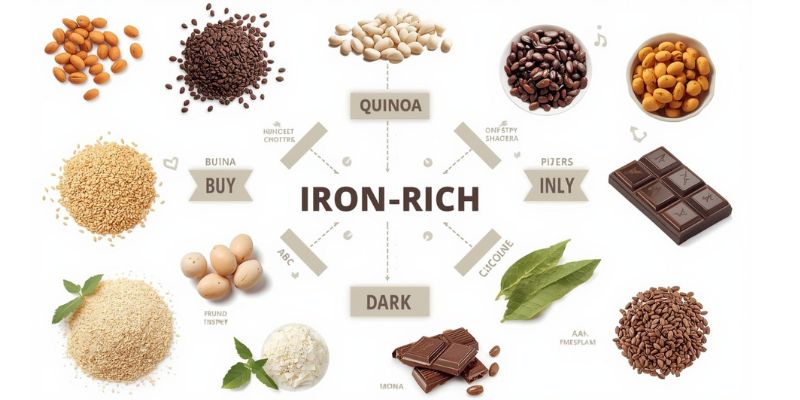
Here are some of the best iron rich foods for restless legs, especially if you want to add more plant based iron sources for RLS relief:
- Lentils (1 cup cooked): 6.6 mg
- Spinach (1 cup cooked): 6.4 mg
- Quinoa (1 cup cooked): 2.8 mg
- Pumpkin seeds (1 oz): 4.2 mg
- Fortified cereals (per serving): varies, often 4–18 mg
- Beans (black, kidney, navy, 1 cup cooked): 3–5 mg
- Dried apricots (½ cup): 2 mg
Nonheme (plant) iron isn’t absorbed quite as easily as animalbased iron, but you can help your body soak up more of it with a few food tricks:
- Eat iron rich foods with a vitamin C source (like bell peppers, oranges, or lemon juice) to give a boost to absorption.
- Try to keep tea, coffee, and calciumrich foods separate from iron meals, since they can block absorption.
I keep things easy with meals like:
- Lentil soup with tomatoes and a squeeze of lemon.
- Sauteed spinach and bell pepper quinoa bowl.
- Chickpea salad with oranges and pumpkin seeds sprinkled on top.
Building meals around iron rich foods for restless legs not only helps your levels, but also supports your whole body with protein, fiber, and healthy carbs.
Here are a few more ideas for packing in more iron daily:
- Add blackstrap molasses to oatmeal or smoothies; just a tablespoon provides almost 20% of your daily iron needs.
- Try roasted chickpeas or edamame as on the go snacks.
- Layer cooked spinach in pasta sauces, lasagnas, or frittatas for extra iron power.
“Learn more about Alternative Therapies for RLS“
Gentle Iron Supplements for RLS Without Constipation
Boosting your iron with food is super important, but sometimes symptoms stick around if your ferritin is really low. That’s when supplements can be pretty handy. I know from personal experience, and from talking with a lot of people, that not all iron supplements are created equal. Some types, especially ferrous sulfate, can be rough on your gut and leave you dealing with constipation or nausea.
Luckily there are gentler options for iron for restless legs that you can talk over with your doctor or pharmacist:
- Ferrous bisglycinate: This form is easy on the stomach and tends to cause fewer digestive problems. It absorbs well, so you can usually take a lower dose.
- Polysaccharide iron complex: Another gentle iron supplement that’s less likely to cause constipation.
Most folks start with 18–30 mg of elemental iron per day. Take your supplement with food and something high in vitamin C (like a few berries or orange juice) to give a boost to absorption. Try to avoid taking it with calciumrich foods or coffee, since they can block iron.
Always keep in mind: Go low and slow to start, and watch out for side effects. Getting your ferritin and iron checked after a few months will show if your plan is working. Some doctors also suggest taking iron every other day instead of daily, as this can boost absorption and cause fewer tummy woes. If you do notice constipation, adding prunes, chia seeds, or a gentle fiber supplement can make a difference.
“Read our Product Reviews for RLS symptom relief”
Natural Ways to Increase Iron for RLS: Food List and Tips
Here’s a quick guide to my go to iron rich foods and how to help your body use them better:
| Food | Iron (mg/serving) | Pair With (for Absorption) | Notes |
|---|---|---|---|
| Lentils (1 cup cooked) | 6.6 | Lemon juice or tomatoes | Plant-based staple, high fiber |
| Spinach (1 cup cooked) | 6.4 | Strawberries or bell peppers | High in non-heme iron |
| Pumpkin seeds (1 oz / ~¼ cup) | 4.2 | Yogurt or citrus | Snack-friendly, also magnesium-rich |
| White beans (½ cup cooked) | 3.3-8.0 | Vitamin C-rich veggies | Versatile in soups/salads |
| Chickpeas (garbanzo beans, ½ cup cooked) | 2.4-4.7 | Lemon juice | Great for hummus or salads |
| Tofu (firm, ½ cup) | 3.0-6.6 | Citrus or tomatoes | Protein-packed plant option |
| Quinoa (1 cup cooked) | 2.8 | Bell peppers | Complete protein grain |
| Soybeans/edamame (½ cup cooked) | 4.4-4.5 | Vitamin C source | High-protein legume |
| Black beans (½ cup cooked) | 1.8-3.6 | Salsa or lime | Easy to add to meals |
| Fortified cereal (1 serving, varies) | 4.5-18 | Milk or fruit | Quick breakfast boost (check labels) |
| Dark chocolate (1 oz, 45-69% cacao) | 2.0-3.0 | N/A (enjoy in moderation) | Treat with antioxidants |
| Kale (1 cup cooked) | 1.0-2.0 | Lemon dressing | Nutrient-dense green |
| Beef liver (3 oz cooked) | 5.0-6.0 | N/A (heme iron) | Highest absorption (if non-vegan) |
| Oysters (3 oz cooked) | 6.0-8.0 | N/A (heme iron) | Seafood source, very high |
| Beef (lean, 3 oz cooked) | 2.0-2.5 | N/A (heme iron) | Good absorption if including meat |
A typical day for me might look like this:
- Breakfast: Fortified cereal with almond milk and orange wedges
- Lunch: Lentil soup with tomatoes and spinach
- Snack: A handful of pumpkin seeds and dried apricots
- Dinner: Chickpea and quinoa salad with red bell peppers
Mixing and matching these options makes upping your iron for restless legs feel a lot less like a chore. If you eat meat or fish, pairing a small amount with plant-based meals can boost absorption of nonheme iron too. Meanwhile, watch out for “hidden” blockers like antacids or calcium supplements that can sneakily lower the impact of your efforts.
Planning ahead can really give a boost to your iron routine. Prepping snacks, keeping citrus on hand, and jotting down your energy and sleep levels each week all help keep things on track. And don’t be afraid to ask your healthcare provider for a checkin if you aren’t hitting the results you want.
“Discover Diagnosis & Treatments for RLS symptom relief”
FAQs on Iron for Restless Legs
How do I know if I need more iron for restless legs?
The best way is to get tested. Look for ferritin, iron, and TIBC on your blood work. Many people with RLS have ferritin under 50–75 ng/mL, but your doctor can guide you on your specific results. Some folks notice other signs, like frequent tiredness, brittle nails, or headaches.
Can I get enough iron for restless legs from just food?
Some people can, especially with a really focused diet and using absorption tips. But if your levels are very low or symptoms are stubborn, supplements might help (always check with your doctor).
Which supplements are less likely to cause constipation?
Gentle iron supplements for RLS, like ferrous bisglycinate or polysaccharide iron, tend to be easier on digestion than classic ferrous sulfate. Start small and work with a healthcare provider.
Are there plantbased iron sources for RLS relief?
Definitely! Lentils, beans, quinoa, spinach, pumpkin seeds, and fortified cereals are all plantbased and great for boosting your iron for restless legs.
What if my restless legs flare up despite enough iron?
Sometimes restless legs are triggered by factors beyond iron—like lack of sleep, too much caffeine, or certain medications. Stress and low magnesium or vitamin D can play a role too. Track your triggers, focus on good sleep hygiene, and check in with your doctor for extra support if needed.
Boost Your Iron Naturally for RLS Relief
Getting your iron for restless legs on track can bring relief that makes nighttime a lot more peaceful. Start by testing your levels, focusing on ironrich foods for restless legs, and turning to gentle iron supplements for RLS if needed.
It’s worth building meals around natural ways to increase iron for RLS—your legs and your sleep will thank you. If you try some of these foods or tricks, let me know how it goes in the comments! And remember progress can take a little time, but supporting your body with the right building blocks really does pay off in better rest and happier muscles.
Disclaimer: This post is based on my personal experience and research. It’s not a substitute for professional medical advice. Consult your doctor before making changes to your health routine, especially if you have underlying conditions or are on medications.